Thursday, 8 November 2012

More Photos of the Mini Mice

I've been asked for more photos of my miniature mice so here they are. Enjoy!
Bless This Mouse
Swinging round the bird feeder
Tree Climbing
Playing in the petunia patch

Saturday, 3 November 2012

Photographing the Miniature Mice

Miniature Mice and Real Chicken!
Often when photographing miniatures, it is best to work in natural light as much as possible. I was having a serious session taking photos of several minis outside for a magazine article when a mad mood overtook me!!
  I got the miniature mice I had made (see my blog post about them under 'Small Projects') and a handful of breadcrumbs, scattered the bread on the grass and posed the mice around it. Then I hid behind a bush with my camera and waited.
  It wasn't long before my bantam hen appeared. She approached cautiously, had a good look at the mice then ignored them and started in on the breadcrumbs.  I got this great picture!
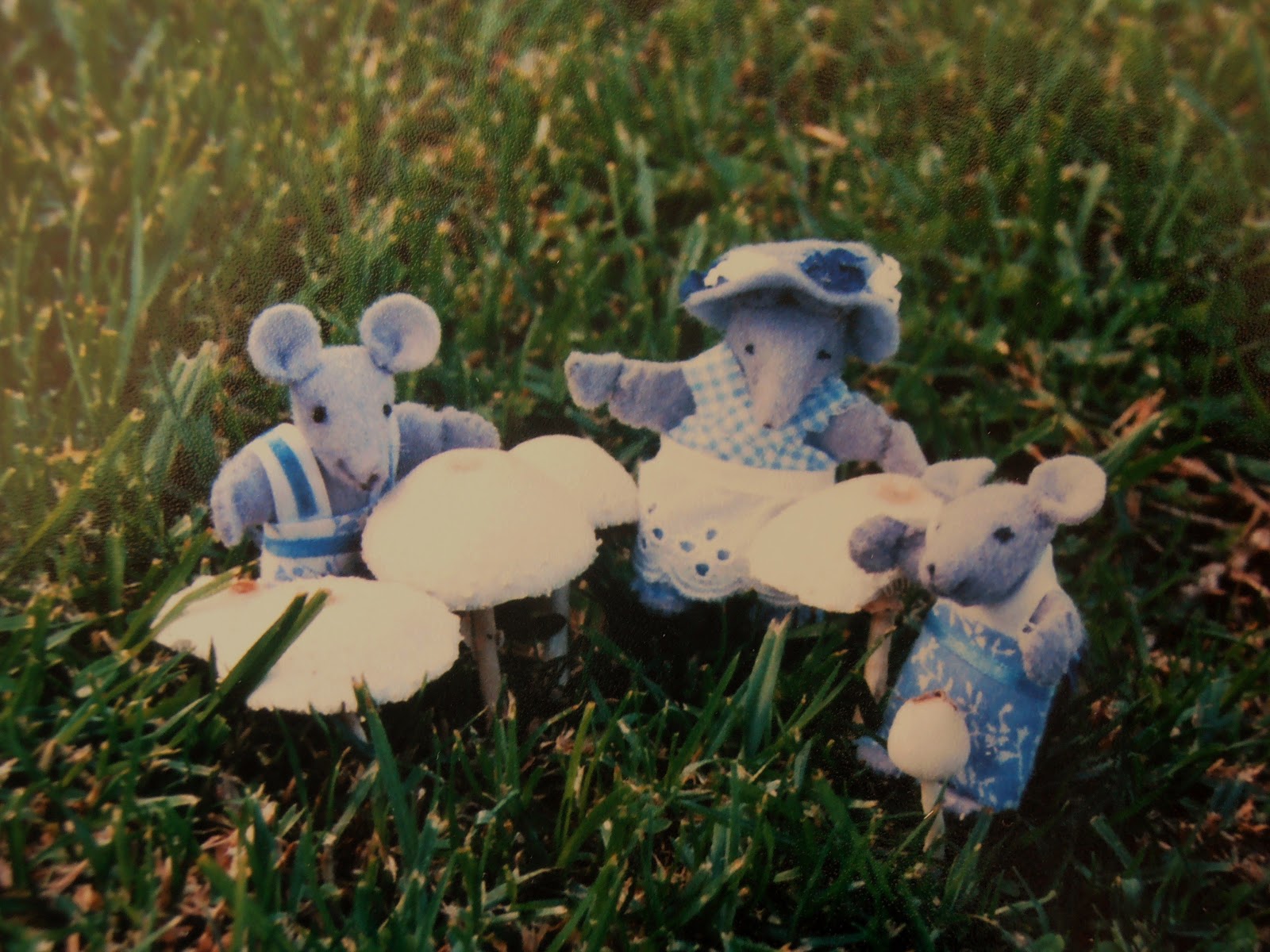
Mini Mice and Real Mushrooms
I got carried away then. I photographed the mice climbing trees, carrying their little suitcases across the drive, peeping out of the tops of my gumboots and playing ring-a-rosey round these mushrooms. 
  Sometimes you just have to release your inner child and be playful! 

Saturday, 27 October 2012

How to Change a Resin Doll Figure in 1:12 Scale

Upgrade a Resin Doll in 1:12 Scale to Make it Unique
If you're a dolls house fan, I'm sure you've seen the resin dolls that are available in 1:12 and 1:24 scale. They are a relatively cheap way of populating a dolls house or miniature scene. They come in such a wide variety of poses: from a housemaid kneeling with a brush and dust pan; to a portly gentleman holding a brandy glass; to a child cuddling a teddy bear, and just about everything you can think of in between!
  And they may be styled as Victorian or Georgian or Edwardian or Art Deco or Modern Day. There are so many to choose from.
  But once you have a resin doll you might want to customise it to make it unique to your project. And there are a couple of ways of doing just that.

  • With fabric and glue. I use UHU glue because it 'grabs' quickly and seems to stick cloth to resin very well.  This started out as a Victorian resin figure in a brown dress with a bustle down the back. Transformed into an Edwardian lady, the only things sewn are the ribbon roses. All the cream fabric and lace was glued straight onto the resin doll. (And yes, she is headless - I wanted her to look like a mannequin in my miniature museum rather than a person.)


Lace is Glued to a Resin Doll to Change the Style of Dress
  • The tricky bits. Some of the resin figurines might have their hands or arms in places that are awkward to stick the fabric around. I found it best to cut and tuck the material so it looked as if it was falling in natural folds. You really just need to play around with it until you're happy with the draped effect. This figurine (ignore the hair, I haven't finished trimming it!) was a lady in a very posh frock but some black fabric, white apron and lace downgraded her status to one of parlour maid.
  • With paint. Those test pots of acrylic paints or tubes of artists' paints come in such a range of colours and brush onto the resin so smoothly that in a few minutes, you can change the colour of your doll's clothing or hair or accessories very cheaply and easily.
It's fun to take a mass-produced object and customise it in your own, unique way. Give it a try!

Monday, 15 October 2012

How to Stock Your Dolls House Pantry

A Well-stocked Edwardian Pantry in 1:12 Scale
Part of the enormous pleasure I get from the dolls house hobby is making all the little bits and pieces to fill the cupboards, drawers and shelves. So stocking a dolls house pantry is right up my alley!
  Because this is the pantry in my Edwardian dolls house, I wanted to make sure that the tins and drinks were accurate for the era. I was lucky enough to find a book with pictures of real Edwardian products and that's when the photocopier was put to good use. I shrank down the photos of the labels and used them. 
Use Real Labels in Miniature
 You could do the same for a modern dolls house, or even a Victorian one if you can find a suitable reference book. It all adds to the authentic details.
  I bought a couple of glass bottles to stick drink labels on. I made square boxes out of card to make the biscuit tins and the tea tin. The ginger beer bottles I made out of Fimo. For the tinned goods, dowelling cut to size, with the labels stuck on and the tops and bottoms painted with chrome nail polish made realistic looking cans.
  I hope you'll use some of these ideas to stock your own mini pantry. Have fun!

Glass Jars Filled with Fimo Fruit and Vegetables

These little glass containers are filled with a variety of fruit and vege I made from Fimo. To get the labels looking as if the cook wrote them, I used a tiny handwriting font on the computer.

Sunday, 7 October 2012

Dolls for an Edwardian Dolls House

Kewpie Dolls, Porcelain Dolls and Paper Dolls as Toys for an Edwardian Dolls House
If, like me, you are the proud owner of an Edwardian dolls house, you'll be keen to stock the nursery with toys suitable for that era. I talked about teddy bears in another post and now here are some ideas for toy dolls.
   In the early years of the 20th century, porcelain headed dolls were replacing wax and wooden ones. They were dressed in miniature versions of children's clothes. Boy dolls were often dressed in sailor suits; girl dolls wore the full outfit from the pantaloons and petticoats to the pretty dresses and white pinafores. Many of the best dolls came from Germany and looked particularly lifelike. My one in the photo was made by Barbara Blowes from Christchurch. 
   A totally different looking doll, not in the least bit realistic, was invented in 1909. The kewpie doll was drawn by Rose O'Neill to illustrate stories in the Ladies Home Journal magazine. With its large eyes, cute hairdo and rounded belly, it couldn't be more different from the traditional dolls.
Scale down paper dolls to 1:12 size
   Paper dolls were popular too. Some were advertisements for products where children could collect a set of dolls and their clothes, as long as their parents kept buying!
   I bought a book called 'Antique Paper Dolls of the Edwardian Era'. It has reproductions in full colour of original paper dolls from France in 1908. I photocopied some of the pages down to 1:12 scale, cut out the teeny tiny dresses and paper dolls and made a little box to put them in. Fiddly, but fun!

Saturday, 22 September 2012

Design and Build Your Own Doll's Houses

A book for the more experienced miniaturist

Design and Build Your Own Dolls' Houses by Beryl Armstrong is an inspiring book for miniaturists who are not satisfied with kitset dolls houses and want to build their own. Beryl is a very experienced miniaturist who has published several books on the subject.
   The dolls house pictured on the cover of this book is an appealing style reminiscent of American houses. But you don't need to be confined to that - full instructions are given for the concepts used in designing a dolls house to your own unique plan.
Chapters in 'Design and Build Your Own Doll's House'
As you can see from the chapter headings, this book is comprehensive. Each step in the building process is illustrated with very clear photographs and full instructions. Even if you are not designing your own dolls house, the ideas in this book are very useful for finishing, lighting and decorating kitset houses as well.
  All in all, this book is a great addition to your library of dolls house and miniatures books. I have found it to be very useful.

Sunday, 16 September 2012

Miniature Teddy Bears for the Dolls House

A selection of miniature teddies
If you are a purist miniaturist who loves authenticity, and if you have a Victorian dolls house, then sorry, you shouldn't have teddy bears in it! You see, they weren't invented until 1902, just after Queen Victoria died. That was when a cartoon showing Teddy Roosevelt with a real bear was published. The Steiff Company started producing teddy bears as toys in 1904.
  The photo shows some examples of the teddies I have in my Edwardian dolls house.
  I made the pull-along bear from a kitset I got in a swap with other miniaturists. The wheels on the little platform are half of the domes used in sewing. The bear itself is made of micro-suede which was easy to work with as it didn't fray.
  The little soft bear has movable arms and legs. I bought that at a dolls house fair.
  The teddy bear plate is a miniature work of art made by an English miniaturist who specialises in ceramics.
  Because the Edwardians were very fond of nautically-themed clothes when dressing their children, I pounced on this tiny resin bear dressed in a sailor suit, with a little yacht. Just the thing for the Edwardian nursery.
  If you really love teddy bears and really want to have them in your dolls house, I'd say, forget the 1902 date and put them wherever you like! Have fun!